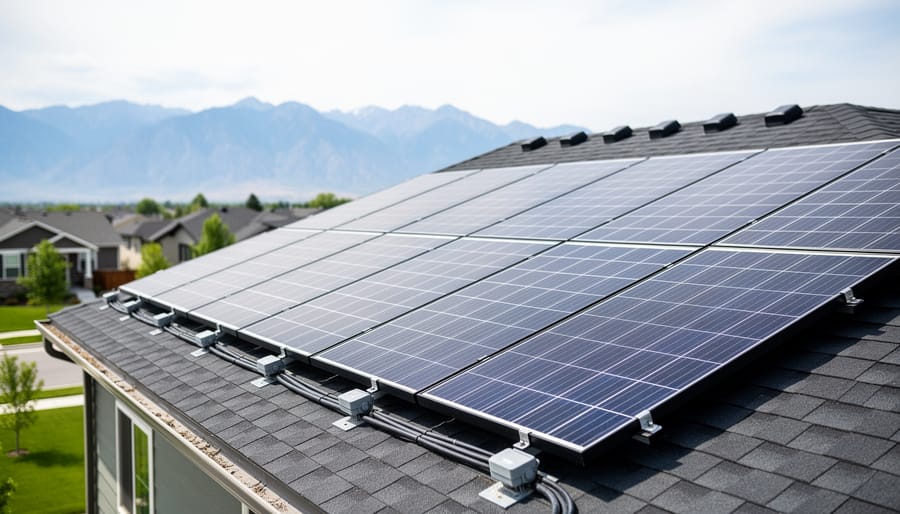
Yes, you’ll almost certainly need a permit to install solar in Salt Lake County, and the office you deal with depends on where your property sits. Salt Lake City, for example, requires a building permit for every solar PV and solar thermal installation. Other parts of the county follow Salt Lake County’s own zoning, construction, and permit guidance, which also covers things like excavation and right-of-way work that can come up on some projects.
That split between city and county rules is the first thing to sort out, and it’s easier than it sounds. Once you know which jurisdiction covers your address, the rest follows a fairly predictable path: a permit application, supporting documents, and an inspection. Salt Lake City’s solar PV application, for instance, is modeled on a widely used expedited permit process for PV systems, so the paperwork is more standardized than many people expect.
Permitting also connects to the pieces you’ll care about next, including Utah’s regional incentives and your utility’s grid connection. Fees and timelines vary, so this guide points you to the official sources for current numbers rather than guessing. Think of it as a map: who issues the permit, what to prepare, and where to confirm the details before you break ground.
What a Solar Permit Is and Why It Matters
A solar permit is official approval from your local government that your system meets building and safety standards before anyone installs it. Think of it as a second set of eyes on the plans. A reviewer checks that the mounting, wiring, and layout are designed safely, and an inspection after installation confirms the work matches what was approved.
That review protects several people at once: you, your household or employees, your neighbors, and the first responders who may one day need to work around your system. It also helps protect your investment, since a properly permitted and inspected system is easier to document if you refinance, sell, or file an insurance claim.
A permit is separate from your utility’s approval to connect to the grid. The permit comes from your city or county and covers the construction itself. The utility handles its own process for connecting your system to its network. You’ll typically need to complete both.
Here are a few terms you’ll see along the way:
- Solar PV
- Short for photovoltaic, these are the panels that turn sunlight directly into electricity.
- Solar thermal
- Systems that use sunlight to heat water or air, such as a solar water heater, instead of making electricity.
- Jurisdiction
- The city or county government with authority over your property and responsible for reviewing and issuing your permit.
- Right-of-way
- Land set aside for public use, such as roads and utility corridors, which can require its own approval if work touches it.
Because the exact steps depend on which jurisdiction your property sits in, the next section helps you figure out which office applies to you.
Salt Lake County vs. Salt Lake City: Which Rules Apply to You?
Unincorporated Salt Lake County
If your property sits in unincorporated Salt Lake County, meaning it isn’t inside a city’s boundaries, the county is generally the government you’ll work with for planning and building questions. The best starting point is the county’s Zoning, Construction & Permits pages, which offer information and guidance for building within the county.
Begin by confirming your address falls under county oversight, then review the zoning rules that apply to your lot. Our zoning map guidance shows how reading a zoning map works, which can help you ask better questions. Because fees and timelines aren’t spelled out here, check them directly with the county office before you plan your schedule.
Salt Lake City Properties
If your property sits inside Salt Lake City limits, the city’s rules apply. Salt Lake City requires a building permit for all solar PV and solar thermal installations, so both electric-producing panels and solar water-heating systems need approval before work begins.
To make that easier, the city offers a Solar PV permit application modeled after the Expedited Permit Process for PV Systems prepared by Bill Brooks, PE.
What does “expedited” mean here? Think of it as a standardized, streamlined way to review common rooftop systems. When an application follows a clear template and asks for the same core information every time, reviewers can check it more efficiently, and applicants know what to prepare. It’s a description of how the process is designed, not a promise of how quickly your permit will be issued.
Because fees and processing times aren’t something this article can state, confirm them directly with Salt Lake City’s building services office before you apply.
Other County Permits That Can Come Into Play
Not every solar project stays neatly on your own roof or lot. Depending on what you’re building and where, other Salt Lake County permits may enter the picture. These tend to be situational, so a standard rooftop system often won’t trigger any of them. They’re most likely to come up with ground-mounted arrays, larger properties, or work that touches public land.
Salt Lake County’s Zoning, Construction & Permits resources list several that are worth knowing about. If your project involves trenching for a conduit run, for example, you may need an Excavation Permit for right-of-ways when that digging happens within county right-of-ways. Likewise, a Flood Control Permit near facilities applies to activity within 20 feet of a Flood Control Facility.
Here’s a quick way to see how these fit together:
| Permit or Guideline | When It May Apply | Related Solar Scenario |
|---|---|---|
| Excavation Permit | Excavating within county right-of-ways | Trenching a conduit run across or alongside a right-of-way |
| Flood Control Permit | Activity within 20 feet of a Flood Control Facility | A ground-mount array or wiring near a flood control facility |
| Right-of-Way Encroachment Permit agreements | Encroaching within Salt Lake County right-of-ways | Equipment or structures extending into a right-of-way |
| Subdivision Approval | Construction of new subdivisions | Planning solar as part of a new development |
| Onsite Wastewater Systems guidelines | Homes or buildings with their own septic or wastewater systems | Siting a ground-mount on a property with a septic system |
Think of this list as a checklist of questions to ask rather than a set of hurdles every homeowner must clear. Your installer can help you spot which ones, if any, apply to your site. When in doubt, the county’s Zoning, Construction & Permits team is the best place to confirm.
How the Solar Permit Process Typically Works
Most solar permit applications follow the same basic path, even though the details change from one jurisdiction to the next.
Start by confirming which office covers your property. Salt Lake City, for example, requires a building permit for all solar PV and solar thermal installations, while other addresses may fall under county oversight. Next, review the zoning guidance from that office. Salt Lake County’s Zoning, Construction & Permits resources are a good place to learn what applies to your lot.
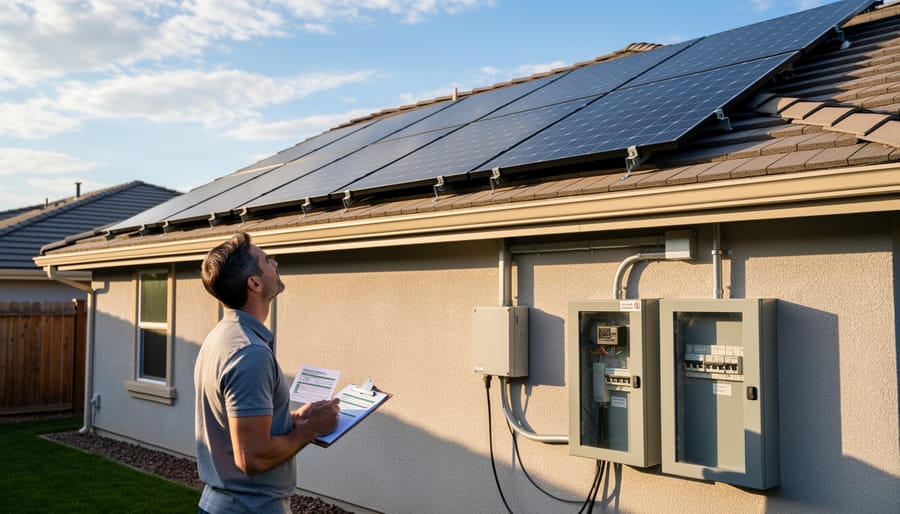
Then comes the paperwork. You (or your installer) prepare the application materials, such as a system description and a site layout, and submit them to the issuing office. A reviewer may come back with questions or requests for corrections. That’s normal, and answering them promptly keeps things moving.
Once the permit is approved, installation can begin. After the work is finished, an inspection confirms the system meets building and safety standards.
If this sounds like a lot to juggle, here’s the good news: most homeowners don’t do it alone. Many installers handle the application, the reviewer back-and-forth, and the inspection scheduling for you. If you’re still choosing a company, look for permit help from installer options as part of your search, and ask exactly which steps they’ll manage.
One caution: fees and processing times vary by jurisdiction and can change, so it’s best to confirm both directly with the office that will issue your permit before you plan your schedule or budget.
What to Gather Before You Apply
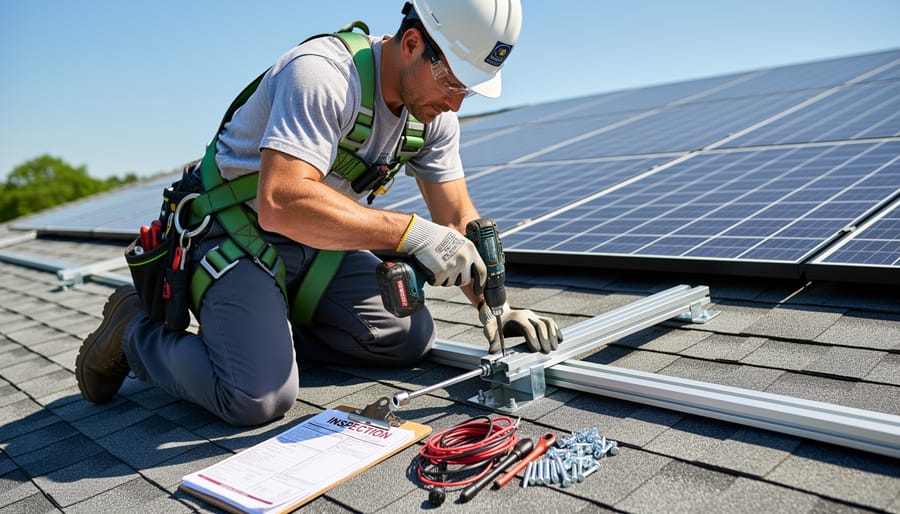
Most solar PV permit applications ask for the same general categories of information, so you can start pulling things together before you ever fill out a form. Think of it as a short checklist:
– Property details: the street address and the name of the property owner as it appears on record.
– Installer information: the contractor’s name, contact details, and license information. If you’re still comparing companies, it helps to choose the right installer before you submit, since they’ll usually handle much of this paperwork with you.
– System description: a plain summary of what’s being built, such as a rooftop solar PV system, plus its overall size and how it will connect to your building’s electrical service.
– Equipment information: the panels, inverters, and mounting hardware being used, typically listed by manufacturer and model.
– Site or roof layout: a drawing or plan showing where the equipment will sit on your roof or property.
Every jurisdiction can word its form a little differently, so always check the current application from the office that will review your project. Salt Lake City, for example, offers a Solar PV permit application modeled after the Expedited Permit Process for PV Systems prepared by Bill Brooks, PE, which is a good example of a standardized form that lays these categories out clearly.
Permits, Incentives, and the Grid: How the Pieces Fit Together
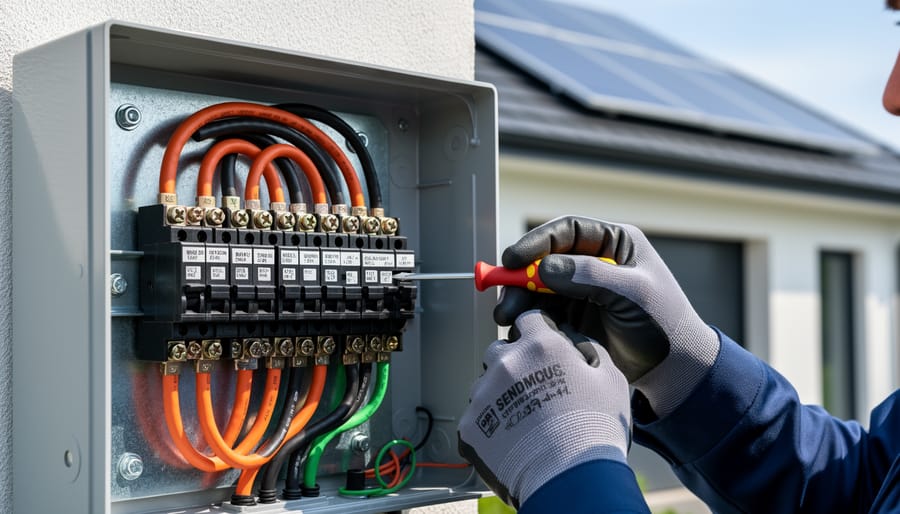
A solar permit is one piece of a bigger sequence, and it connects to the financial and utility steps that follow. A permitted, inspected system gives you a documented, code-compliant installation. That record is typically what lenders, installers, and incentive programs expect to see when you submit your paperwork, so keeping your permit file organized now makes later steps easier.
The grid connection is a separate step. Your local electric utility has its own approval process for connecting a system to its lines, and it works independently from your city or county permit. Plan for both, and ask your installer how they coordinate the two.
Incentives are where Utah homeowners and businesses often have the most questions. State and federal programs can change in amount, eligibility, and deadlines, so it’s wise not to assume a figure you saw last year still applies. Check the official sources for current details and confirm that your project and your tax situation qualify before you build your budget around any credit or rebate.
When you’re ready to dig into the numbers, our incentive and financing resources can help you compare options and know what to ask.
Common Questions About Solar Permits in Salt Lake County
Most homeowners have a handful of the same questions before they start. Here are straightforward answers, with pointers to the offices that can confirm the details for your property.
Do I need a permit for rooftop solar?
If your property is in Salt Lake City, a building permit is required for all solar PV and solar thermal installations. In other parts of the county, check with Salt Lake County’s Zoning, Construction & Permits resources to confirm what applies to your address.
How do I find out what it costs and how long it takes?
Fees and processing times vary, so the most reliable answer comes straight from the office that will issue your permit. A quick call or a visit to their website will give you current numbers rather than guesses.
Does my property’s location change the process?
Yes. Whether you fall under Salt Lake City or Salt Lake County determines which office handles your application. Confirming your jurisdiction first keeps you from filling out the wrong paperwork.
Where do I find current forms?
Go directly to the issuing office’s website. Salt Lake City, for example, offers a Solar PV permit application modeled after the Expedited Permit Process for PV Systems.
As for who handles the paperwork, many homeowners lean on their solar company to prepare and submit the application, since that’s a routine part of the job. It’s still worth asking up front exactly what your contractor will take care of. Our guide to finding the right installer and permitting support can help you know what questions to bring to that conversation.
Getting a solar permit right comes down to a few simple habits. Start by confirming whether your property falls under Salt Lake County or a city like Salt Lake City, since that decides which office you’ll work with. Then check whether your project calls for anything extra, such as an excavation or flood control permit for ground-mounted systems or work near county right-of-ways.
Next, pull together your property details, equipment information, and site layout so your application is ready when you are. Before you commit to a schedule or budget, ask the issuing office about current fees and processing times, because those can change.
None of this has to feel overwhelming. A little preparation up front keeps your project moving and helps you avoid surprises later. When you’re ready for your next step, explore our resources on local zoning, Utah solar incentives, and installation. They’ll help you turn a well-planned permit into a system you can count on for years to come.