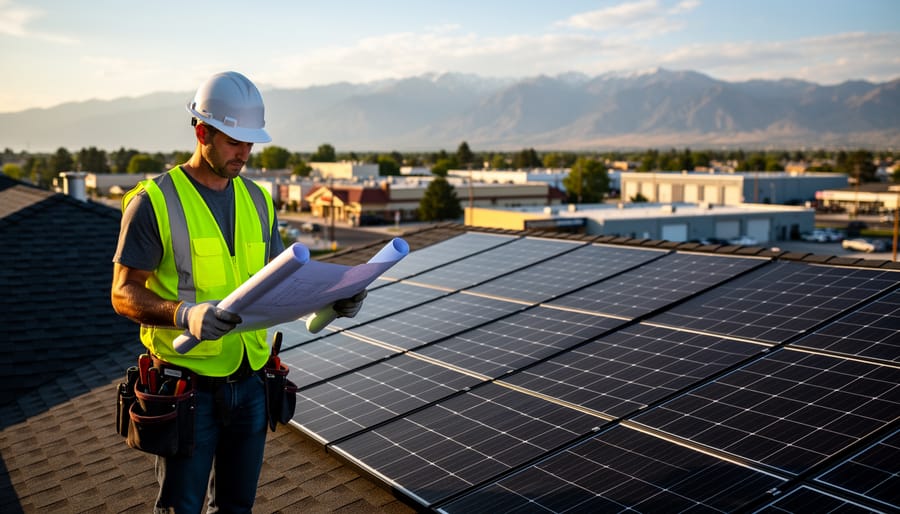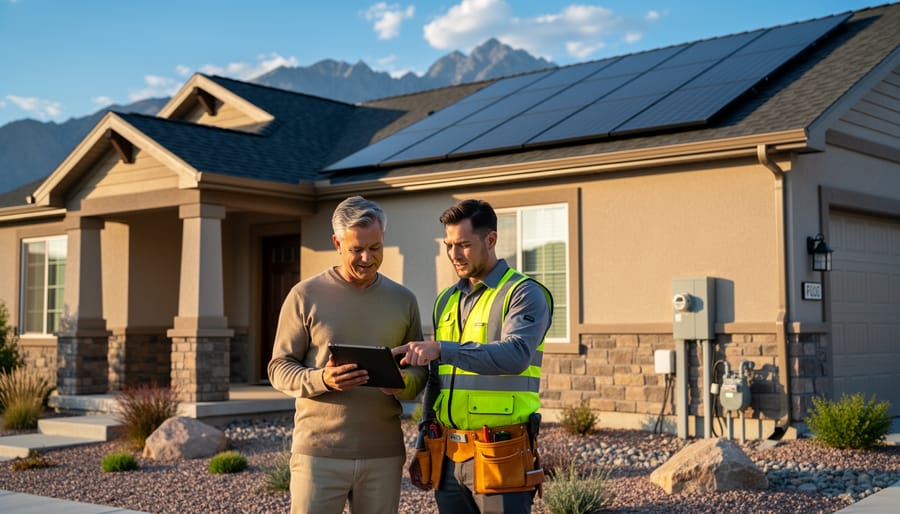
Compare at least three solar installers before signing a contract, requesting itemized quotes that break down equipment costs, labor, permits, and warranties. Utah’s competitive solar market means pricing can vary by thousands of dollars for identical systems, so getting multiple bids protects your wallet and helps you spot unusually low quotes that might signal corner-cutting or hidden fees.
Verify your installer holds a current Utah contractor license and carries liability insurance, checking their standing with the state Division of Occupational and Professional Licensing. Licensed contractors must meet bonding requirements and follow building codes, giving you legal recourse if something goes wrong. Ask for proof of workers’ compensation insurance too, since you could be liable for injuries on your property if they lack coverage.
Check whether your property requires special permits or has restrictions by understanding zoning codes in your municipality. Some Utah cities have setback requirements, height limits, or HOA restrictions that affect panel placement. A quality installer will handle permit applications, but knowing the rules yourself prevents delays and ensures your system meets local requirements.
Ask how the installer will maximize your federal tax credit and Utah’s state tax credit, which currently offers up to $1,600 for residential systems. The federal Investment Tax Credit covers 30% of your total system cost through 2032, but only if the installation meets IRS requirements. Experienced Utah installers know how to structure your purchase to capture both incentives, potentially saving you $10,000 or more on an average residential system. Rocky Mountain Power customers should also inquire about net metering policies, since how your utility credits excess generation directly impacts your return on investment.
What to Look for in a Utah Solar Contractor
Licensing and Certification Requirements
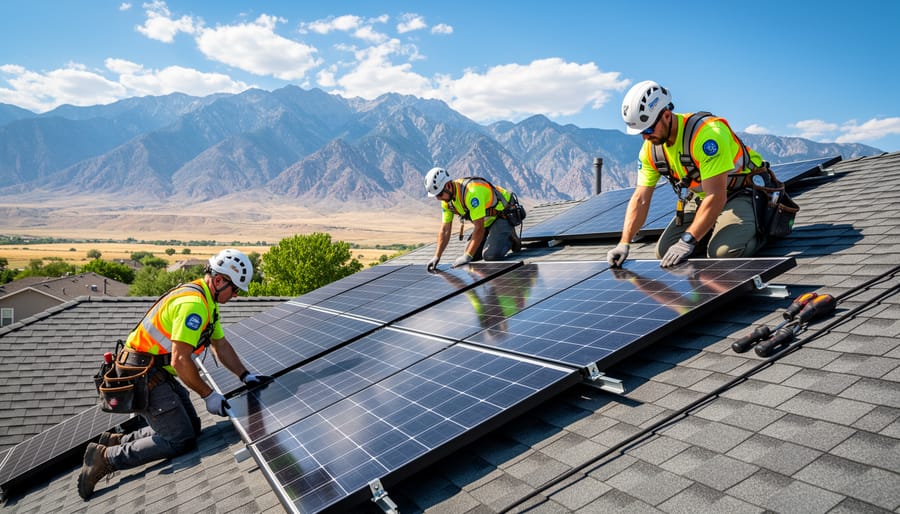
Before signing any contract, verify that your solar installer holds the proper credentials to work in Utah. The state requires solar contractors to obtain an electrical or construction license through the Division of Occupational and Professional Licensing. You can check specialty contractor license requirements and verify a contractor’s active status directly through the state database.
Beyond state licensing, look for installers with NABCEP Board Certifications. The North American Board of Certified Energy Practitioners sets the industry standard for solar professional competency. While not mandatory in Utah, NABCEP certification demonstrates a contractor has met rigorous training standards and stays current with evolving technology and best practices.
Don’t hesitate to ask potential installers for their license numbers upfront. Legitimate companies will readily provide this information. You can then confirm their credentials through Utah’s online license lookup system, which shows license status, any disciplinary actions, and expiration dates.
Some Utah municipalities have additional permitting requirements, particularly in areas with historic districts or specific zoning regulations. A qualified contractor will be familiar with local permit processes and building codes in your area. They should handle the permitting paperwork as part of their service, ensuring your installation meets all regulatory requirements from the start. This protects your investment and ensures you’re eligible for available incentives and rebates.
Experience with Utah-Specific Conditions
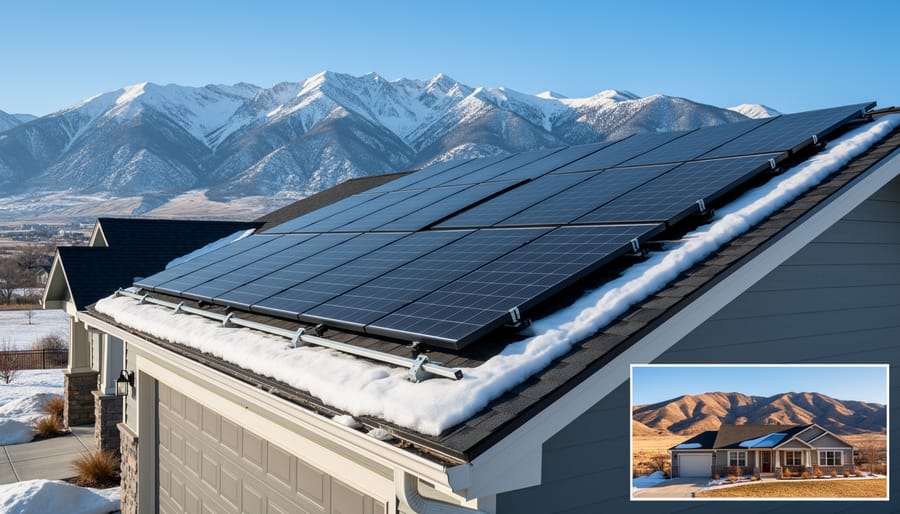
Utah’s climate and regulatory landscape present unique challenges that make local installer experience essential. Snow loads are a perfect example. While solar panels shed snow effectively, the structural design must account for heavy winter accumulations in northern counties and mountain areas. An installer familiar with local design criteria will properly engineer mounting systems to handle these loads without expensive over-building.
Temperature swings also matter more than you might think. Utah experiences some of the widest daily temperature variations in the country, with summer days reaching over 100 degrees and winter nights plunging below zero. These extremes affect equipment selection, wiring methods, and mounting hardware. Installers experienced in the region know which panels and inverters perform reliably through these cycles.
Utility interconnection processes vary significantly across Utah’s service territories. Rocky Mountain Power follows different procedures than city-owned utilities in places like Provo or St. George. Each utility has specific application requirements, inspection protocols, and timelines. A local installer who regularly works with your utility can navigate these requirements efficiently, avoiding delays that could push your project back months.
Understanding local zoning codes is equally important. Setback requirements, height restrictions, and aesthetic guidelines differ between cities and counties. Some municipalities have streamlined solar permitting, while others require detailed architectural review. An installer who knows these nuances will design a compliant system from the start, preventing costly redesigns or permit rejections.
Ask potential installers about their experience with projects in your specific area. Request references from nearby installations and inquire about their relationships with local building departments and utilities.
Questions to Ask Before Hiring
Asking the right questions upfront can save you thousands of dollars and prevent serious headaches down the road. Start by confirming that any contractor you’re considering holds proper licensing through the Utah Division of Occupational and Professional Licensing. Ask for their license number and verify it yourself. This isn’t about distrust; it’s about protecting your investment.
Next, dig into their experience with Utah-specific regulations. How many installations have they completed in your city or county? Do they understand local zoning requirements and HOA restrictions that might affect your project? A contractor familiar with your area will navigate permit approvals faster and avoid costly delays.
Financial details matter enormously. Request a breakdown of all costs, including equipment, installation labor, permits, and any potential additional fees. Ask specifically about warranty coverage: what does the installer warranty versus what the manufacturer covers? Most equipment warranties run 25 years for panels and 10-15 years for inverters, but installation workmanship warranties vary widely. Get everything in writing.
Don’t skip the conversation about financing and incentives. Will they help you claim the 30% federal tax credit? Can they explain how Utah’s net metering policy works with Rocky Mountain Power or your local utility? Some contractors assist with paperwork for state and local incentives, while others leave you to figure it out alone.
References tell you what promises actually mean. Ask for at least three recent customers in your area, then actually call them. Were there unexpected costs? Did the installation timeline match what was promised? How has the system performed? Has the contractor been responsive to questions or issues after installation?
Probe their approach to system design. Will they conduct a detailed site assessment before proposing equipment? How do they account for Utah’s seasonal variation, from scorching summers to snowy winters? A quality installer will analyze your roof’s orientation, shading patterns, and your actual energy usage rather than offering a one-size-fits-all solution.
Finally, clarify the project timeline and what happens if something goes wrong. Who handles repairs during installation? What’s their process if equipment arrives damaged or defective? How long will your power be off during hookup? Understanding these details prevents surprises when you’re already committed.
The contractors who welcome these questions and answer them clearly are usually the ones worth hiring. Those who seem annoyed or provide vague responses are showing you exactly how they’ll handle problems after they have your money.

Understanding Solar Quotes and Proposals
Getting multiple quotes is essential, but knowing how to interpret them can feel overwhelming. A quality solar proposal should give you a complete picture of your investment, not just a bottom-line price. Start by checking that each quote includes system size (measured in kilowatts), the specific panel and inverter brands with model numbers, and a detailed breakdown of costs. You’ll want to see equipment, labor, permits, and any additional fees listed separately.
Utah-specific incentives should be clearly identified in your proposal. The Wattsmart Battery Program rebates through Rocky Mountain Power, federal tax credits, and any applicable local utility incentives need to be itemized. If an installer lumps everything into one “after incentives” price without showing the math, ask for clarification.
Production estimates matter significantly. Your proposal should include an analysis based on your actual roof orientation, shading conditions, and Utah’s solar irradiance data. Be wary of installers who promise unrealistically high production numbers or guaranteed savings without conducting a thorough site assessment first.
| Proposal Element | Should Include | Red Flags |
|---|---|---|
| System Details | Specific equipment brands, models, capacity ratings, warranties | Generic “high-efficiency panels” without specifications |
| Cost Breakdown | Itemized equipment, labor, permits, interconnection fees | Single lump sum price with no detail |
| Incentives | Federal tax credit, state programs, utility rebates listed separately | “Total after incentives” without showing calculations |
| Production Estimate | Site-specific analysis with shading report and methodology | Generic estimates or guaranteed savings promises |
Contract terms deserve careful attention. Watch for escalator clauses in leases or PPAs that increase your payments annually. These can erode your savings over time, particularly in Utah’s relatively stable energy market. Also scrutinize transfer provisions if you plan to sell your home. Some contracts make home sales complicated.
Payment terms should be transparent. Most reputable installers require a deposit (typically 10-20%), with the balance due upon completion and inspection. Pressure to pay the full amount upfront is a serious warning sign. Your contract should also specify project timelines, including permits through local jurisdictions like Salt Lake County or Utah County, which have different processing speeds.
Finally, compare warranties across proposals. Equipment warranties are standard, but workmanship guarantees vary. A 10-year workmanship warranty protects you if installation issues arise down the road.
Regional Considerations Across Utah
Wasatch Front Contractors
The Wasatch Front encompasses Salt Lake, Davis, Weber, and Utah counties, and it’s where you’ll find the highest concentration of solar contractors in the state. This urban corridor has a mature solar market with dozens of installers competing for your business, which can work to your advantage if you know how to shop smart.
More contractors means more competitive pricing. You’ll generally see lower per-watt installation costs here compared to rural areas, simply because companies are bidding against each other. But don’t let that lead you to choose based on price alone. The contractor density also means quality varies widely, from established firms with hundreds of local installations to newer companies still building their track record.
Many Wasatch Front cities have specific zoning regulations for solar installations, particularly in historic districts or planned communities. A good local contractor will know these requirements and factor them into your proposal upfront, saving you delays during permitting.
The region also benefits from Rocky Mountain Power’s Wattsmart program and various municipal incentives that can stack with federal tax credits. Experienced installers will help you navigate these opportunities to maximize your savings.
Rural and Southern Utah Options
Finding a qualified solar contractor in rural and southern Utah requires a bit more legwork than in the Washer Front, but the options are growing. Communities like St. George, Cedar City, and Moab have seen increased solar adoption in recent years, bringing more experienced installers to these regions. However, contractor availability can still be limited compared to Salt Lake City or Provo, so expect to do thorough research and possibly wait longer for installation dates during peak seasons.
One factor to consider is travel fees. If you’re located outside a contractor’s primary service area, you may encounter additional charges for the distance they need to cover. Some installers based in the Wasatch Front will travel south for larger projects, but smaller residential installations might not justify their trip costs. Ask upfront about any distance-related fees to avoid surprises in your final quote.
Local zoning variations can be significant across southern Utah municipalities. St. George, for instance, has specific setback requirements and design review processes that differ from Cedar City’s regulations. Moab’s unique tourism economy and proximity to national parks means additional aesthetic considerations may apply to your installation. Before signing any contracts, verify that your chosen contractor understands the permitting requirements specific to your city or county.
Check with your local building department early in the process. Rural areas sometimes have longer review times simply because they handle fewer solar applications and may need extra time to evaluate your project.
Navigating Financing and Incentive Programs
Going solar in Utah means taking advantage of multiple financial incentives, and the right contractor makes all the difference in maximizing these opportunities. A knowledgeable installer will guide you through federal tax credits, state-specific programs, and local utility rebates that can significantly reduce your upfront costs.
The federal Investment Tax Credit currently allows you to claim 30% of your solar installation costs on your taxes. But that’s just the beginning. Utah offers additional benefits through programs like Rocky Mountain Power’s Wattsmart Battery program for customers adding energy storage, and various community solar initiatives across different utilities. Your contractor should be well-versed in these options and able to explain how they apply to your specific situation.
Beyond rebates, financing options can make solar accessible even if you’re not ready to pay cash upfront. Many contractors work with lenders who specialize in solar loans, offering terms that allow your energy savings to offset monthly payments. Some installers also facilitate lease agreements or power purchase agreements (PPAs), though ownership models typically provide better long-term value in Utah’s favorable solar market.
A quality contractor will walk you through the numbers honestly. They should provide clear comparisons between financing options, explain how incentives stack, and show you realistic payback timelines based on your actual energy usage. They’ll also handle the paperwork for utility rebates and tax credit documentation, saving you considerable hassle.
Don’t hesitate to ask contractors about their experience with local programs. Installers who regularly work in Utah understand regional nuances, including how incentives interact with local zoning requirements and building permits. This expertise ensures you don’t leave money on the table and helps your project move smoothly from contract signing to final inspection.
Red Flags and Warning Signs
Choosing a solar installer is a significant decision, and recognizing red flags early can save you thousands of dollars and years of frustration. Unfortunately, Utah’s growing solar market attracts some contractors who prioritize quick sales over quality installations.
High-pressure sales tactics should immediately raise concerns. If a salesperson insists you must sign today to lock in pricing or claims an incentive expires tomorrow, step back. While legitimate deadlines exist for programs like the federal Investment Tax Credit, reputable companies give you time to review proposals and ask questions. Utah’s solar market is competitive enough that you shouldn’t feel rushed into a decision.
Be wary of promises that sound too good to be true. No honest contractor can guarantee your system will eliminate your Rocky Mountain Power bill entirely without first analyzing your usage patterns, roof orientation, and shading. Similarly, be skeptical of installers who claim their panels are “the only ones that work in Utah’s climate.” Quality panels from multiple manufacturers perform well here.
Transparency matters tremendously. Contractors should willingly provide proof of licensing, insurance certificates, and customer references. If they dodge questions about warranties, installation timelines, or equipment specifications, that’s a warning sign. You deserve clear answers about what happens if your system underperforms or needs repairs in five years.
Watch for incomplete documentation. Professional installers provide detailed written estimates showing equipment costs, labor, permits, and interconnection fees separately. They explain Utah’s net metering policies and how your local utility handles excess generation. Vague quotes with single lump-sum figures make it impossible to verify you’re getting fair value.
Finally, be cautious of contractors unfamiliar with Utah-specific requirements. Installers should understand local building codes, HOA solar access laws, and municipal permitting processes in your city. If they can’t discuss these details confidently, they may lack the experience needed for a successful installation.
Choosing the right solar contractor is one of the most important decisions you’ll make on your solar journey. A quality installation can provide decades of reliable energy savings, while a poor one can lead to costly repairs, underperforming systems, and frustration. That’s why thorough research matters so much.
The Utah Solar Contractor Directory gives you a starting point to explore qualified installers across the state. But remember that the directory is just the beginning. Take time to compare multiple quotes, verify licenses and insurance, check references, and ask detailed questions about warranties, equipment options, and what your system will actually produce given Utah’s climate and your specific roof conditions.
The right installer won’t rush you through the process. They’ll be transparent about costs, patient with your questions, and genuinely invested in your long-term satisfaction. They’ll explain how local zoning requirements might affect your installation timeline and help you maximize available incentives like the federal tax credit and any utility rebates.
Trust your instincts during consultations. If something feels off or a price seems too good to be true, keep looking. Your solar investment deserves a partner who will stand behind their work for years to come.