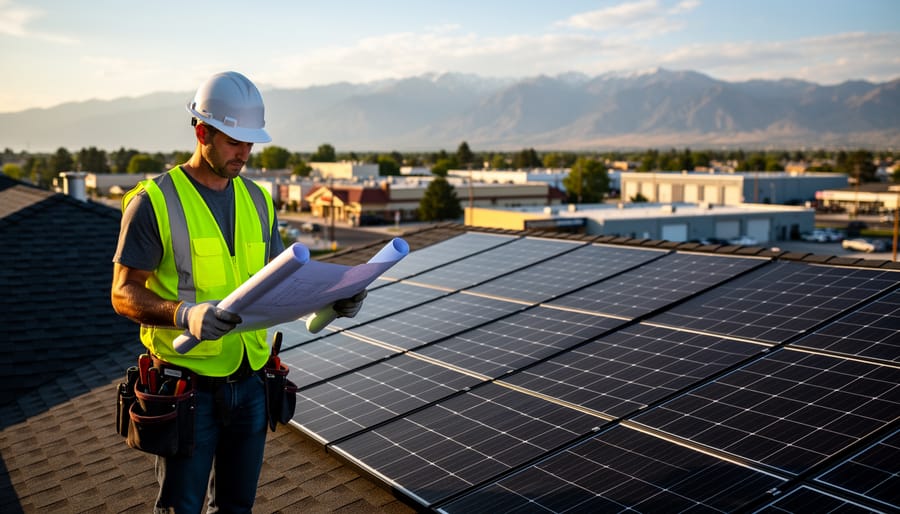
Access West Valley City’s official zoning map through the city’s online GIS portal or planning department website to identify your property’s zoning designation before pursuing solar panels in West Valley City. Download the current zoning ordinance document—specifically Chapter 12 covering supplementary regulations—to understand setback requirements, height restrictions, and architectural guidelines that affect solar installations in your zone.
Cross-reference your property’s zoning classification (residential R-1 through R-4, commercial, or industrial) with the city’s solar-specific regulations, as each zone imposes different restrictions on panel placement, mounting systems, and visibility from public rights-of-way. Properties in residential zones typically face stricter aesthetic requirements, while commercial zones often permit ground-mounted arrays with fewer limitations.
Contact the West Valley City Building Division at 801-963-3271 before designing your system to confirm whether your zone requires additional conditional use permits or design review approval. This single call prevents costly redesigns and identifies whether your installation qualifies for the streamlined permit process available for compliant roof-mounted systems.
Review your Homeowners Association covenants alongside zoning regulations, as HOA restrictions can be more stringent than city requirements and may mandate specific panel colors, mounting angles, or screening methods. West Valley City’s zoning compliance alone doesn’t guarantee approval if your property falls under additional HOA jurisdiction.
Understanding these zoning parameters upfront accelerates your permit approval timeline and ensures your solar investment meets all regulatory requirements while maximizing energy production within allowable parameters.
Understanding the West Valley City Zoning Map
The West Valley City zoning map is an essential tool for property owners considering solar panel installations. This official document divides the city into distinct zones, each with specific regulations that affect what you can build or modify on your property, including solar energy systems. Understanding your property’s zoning classification helps you determine what solar installation requirements apply to your situation.
To access the official zoning information, visit the city’s interactive zoning map through the West Valley City website. This digital resource allows you to search your address or navigate to your property location on the map. Once you’ve located your property, you’ll see a color-coded zone designation that corresponds to specific land use categories.
West Valley City uses several primary zoning classifications. Residential zones typically include R-1 for single-family homes, R-2 for duplexes, and R-3 for multi-family dwellings. Commercial zones are marked with C designations, while manufacturing and industrial areas use M classifications. Each zone type has different setback requirements, height restrictions, and permitted uses that can influence your solar project design and placement.
For solar installations, your zone designation determines factors like how close panels can be to property lines, whether ground-mounted systems are allowed, and if additional permits are required. Residential zones generally offer more flexibility for rooftop solar, while commercial zones may have additional considerations regarding visibility and building codes.
By identifying your property’s specific zoning designation before planning your solar project, you’ll avoid costly delays and ensure your installation meets all local requirements from the start.

Zoning Districts and Solar Installation Rules
Residential Zones (R-1, R-2, R-3)
West Valley City’s residential zones have specific regulations that affect how you can install solar panels on your property. Understanding these requirements helps ensure your solar project moves smoothly through the approval process.
The three main residential zones in West Valley City each have distinct rules for solar installations:
| Zone Type | Maximum System Size | Placement Restrictions | Permit Required |
|---|---|---|---|
| R-1 (Low Density) | 10 kW typical | Roof-mounted preferred; rear yard only for ground systems | Yes |
| R-2 (Medium Density) | 8 kW typical | Roof-mounted strongly encouraged; limited ground options | Yes |
| R-3 (High Density) | 6 kW typical | Roof-mounted only; no ground systems | Yes |
For roof-mounted systems across all residential zones, panels cannot extend more than 18 inches above the roofline. This height restriction maintains neighborhood aesthetics while allowing proper panel angle for optimal energy production. Most residential installations easily meet this requirement.
Ground-mounted systems face more stringent rules. In R-1 zones, these systems must be placed in rear yards with a minimum five-foot setback from property lines. They cannot exceed eight feet in height. R-2 zones allow ground systems only with additional approval, while R-3 zones typically prohibit them entirely due to limited yard space.
Setback requirements ensure your solar installation doesn’t encroach on neighboring properties or public rights-of-way. Standard residential setbacks apply to all solar equipment, including inverters and battery storage units. Utah homeowners benefit from state-level solar access laws that prevent unreasonable restrictions, giving you additional protection when planning your installation.
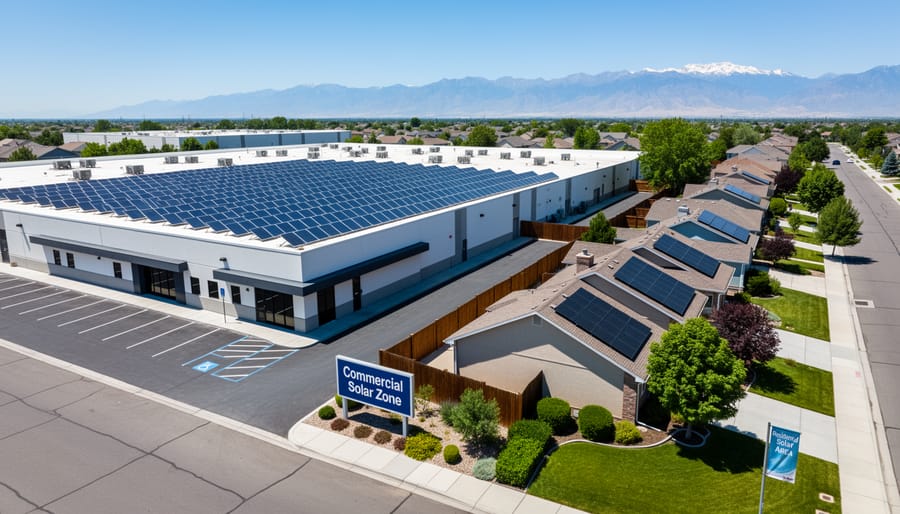
Commercial and Industrial Zones
Commercial and industrial properties in West Valley City have excellent opportunities for solar installations, with regulations designed to accommodate larger-scale systems. These zones typically allow rooftop solar arrays without height restrictions, provided the panels don’t exceed the building’s existing roofline by more than five feet. This gives Business owners flexibility in maximizing energy production while maintaining the property’s aesthetic profile.
Parking lot solar canopies are increasingly popular in commercial zones, serving the dual purpose of generating clean energy and providing shade for vehicles. West Valley City encourages these installations, though they require additional permitting to ensure structural safety and proper drainage. Ground-mounted systems are permitted in industrial zones, particularly for warehouses and manufacturing facilities with available land. These installations must maintain setback requirements from property lines, usually between 10 and 20 feet depending on the specific zone.
Business owners should note that commercial solar projects often qualify for federal tax credits and Utah’s renewable energy incentives, which can offset installation costs significantly. Before moving forward, review your property’s specific zoning designation on the city’s official zoning map and consult with the planning department to confirm compliance. Many commercial properties also benefit from expedited permitting processes when working with licensed solar contractors familiar with local requirements.
Mixed-Use and Special Districts
West Valley City’s mixed-use and special districts present unique opportunities and considerations for solar installations. These areas, which blend residential, commercial, and sometimes industrial uses, generally welcome solar energy projects but may have additional aesthetic or structural requirements to maintain the character of the development.
In mixed-use zones, solar panels often need to integrate harmoniously with the building’s overall design. You might encounter guidelines about panel placement, color matching, or screening requirements to ensure installations complement surrounding properties. Property owners should review both city zoning requirements and any homeowners association or development covenants that may apply.
Historic districts within West Valley City require special attention. While the city supports renewable energy, installations in or near historic areas may need approval from preservation committees to ensure panels don’t detract from architectural integrity. This might mean exploring less visible mounting options, such as ground-mounted systems or roof placements on non-street-facing sides.
Overlay districts, which add extra regulations to base zoning, can also affect solar projects. These might include airport approach zones, environmental protection areas, or planned development districts. Each overlay has specific rules that work alongside standard zoning requirements.
Before proceeding with your solar installation in these special areas, contact West Valley City’s planning department early in your process. They’ll help you understand which regulations apply to your specific location and guide you through any additional approval steps needed.
Key Solar Zoning Requirements in West Valley City
Setbacks and Property Line Restrictions
West Valley City enforces specific setback requirements that determine how close solar panels can be installed to property boundaries and neighboring structures. These regulations protect neighboring properties while ensuring safe access for maintenance and emergency services.
For residential solar installations, ground-mounted solar arrays typically must maintain a minimum setback of 5 to 10 feet from side and rear property lines, though this varies by zone. Front yard setbacks are generally more restrictive, often requiring 20 to 25 feet from the street-facing property line. Roof-mounted systems usually don’t face the same setback restrictions since they’re integrated into existing structures, but they must still comply with building height limits.
Commercial properties may have different setback requirements depending on their zoning designation. Industrial zones sometimes allow reduced setbacks, while commercial zones adjacent to residential areas may require larger buffers to minimize visual impact on neighboring homes.
Distance from roads is another consideration. Solar installations near public rights-of-way must avoid obstructing sightlines for drivers and pedestrians. Your local zoning map will indicate these buffer zones, and the city’s planning department can clarify specific measurements for your property. Always verify current setback requirements before finalizing your solar panel placement to avoid costly modifications during the permitting process.
Height and Size Limitations
West Valley City establishes specific height and size parameters for solar installations to maintain neighborhood aesthetics while promoting renewable energy adoption. Understanding these limitations helps you plan an effective solar system that meets local requirements.
For roof-mounted solar panels, the height restriction typically allows installations that don’t extend more than 18 inches above the roofline at any point. This ensures panels remain visually integrated with your home’s existing structure. Ground-mounted systems generally face a maximum height limit of 15 feet when measured from ground level to the highest point of the array. These height restrictions apply across most residential zones, though commercial and industrial areas may have different allowances.
System size limitations often relate to your property’s dimensions and your household’s energy consumption. In residential zones, solar arrays typically cannot exceed the building’s footprint or the lot coverage maximums established for your specific zone. Ground-mounted systems should be placed in rear or side yards when possible, with setback requirements ranging from 5 to 10 feet from property lines.
The total system capacity usually aligns with your documented energy usage, preventing oversized installations that might impact surrounding properties. West Valley City encourages right-sizing your solar system to match your actual electricity needs, which also maximizes your financial return on investment while respecting community standards.
Aesthetic and Design Standards
West Valley City takes solar panel aesthetics seriously to maintain neighborhood character while promoting renewable energy. Panels should generally be flush-mounted rather than tilted when installed on pitched roofs visible from streets, creating a cleaner appearance. The city typically requires panels to blend with your roof’s color scheme when feasible, though this shouldn’t significantly compromise energy production. Ground-mounted systems usually need screening with landscaping or fencing if visible from adjacent properties or public rights-of-way. Before installation, check if your homeowner association has additional design guidelines, as HOA rules can be more restrictive than city codes. However, Utah law protects your right to install solar with reasonable restrictions. Many West Valley City neighborhoods successfully balance attractive installations with maximum energy generation. During the permit review process, city planners evaluate visual impact alongside safety and structural considerations, so presenting a well-planned design helps expedite approval.
Permit Process and Zoning Compliance
Navigating the permit process in West Valley City doesn’t have to be overwhelming. By following the right steps and understanding local requirements, you can ensure your solar project moves forward smoothly while staying compliant with zoning provisions.
- Review the zoning map and identify your property’s zone designation to understand which regulations apply to your solar installation.
- Contact the West Valley City Community Development Department at (801) 963-3220 to confirm specific requirements for your zone and property type.
- Prepare your solar installation plans, including system specifications, mounting details, and electrical diagrams that meet local building codes.
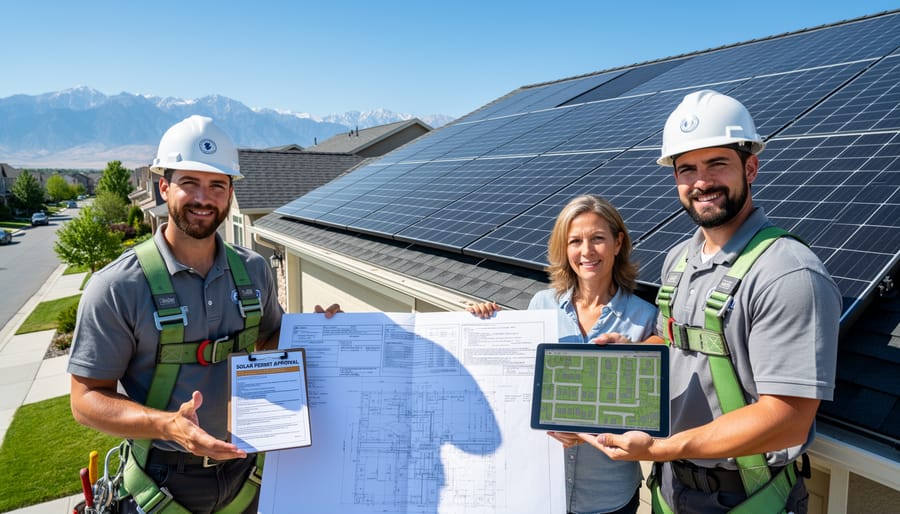
- Submit your permit application along with required documentation, including site plans showing panel placement, property lines, and setback measurements.
- Schedule and pass required inspections at various stages of installation, typically including electrical, structural, and final inspections.
- Receive final approval and certificate of occupancy before connecting your system to the grid.
The entire process typically takes between two to six weeks, depending on the complexity of your project and the completeness of your application. Working with an experienced local solar installer can significantly streamline this timeline, as they’re already familiar with West Valley City’s specific requirements and common approval challenges.
Utah residents benefit from streamlined solar permitting procedures compared to many other states, thanks to state legislation encouraging renewable energy adoption. West Valley City has adopted these standards while maintaining necessary safety and aesthetic considerations for different neighborhoods.
Keep in mind that certain zones may require additional documentation or design modifications. For example, properties in residential zones might need neighbor notification letters, while commercial properties could require additional engineering certifications. Always verify current requirements before beginning your application, as regulations can be updated to reflect new building standards or community needs. Planning ahead and gathering all necessary documentation upfront will help you avoid delays and ensure a successful solar installation.
Common Zoning Challenges and How to Address Them
West Valley City property owners occasionally encounter zoning challenges during the solar installation process, but most issues have straightforward solutions when addressed proactively.
One common challenge involves setback requirements. Some residential zones require solar panels to be positioned a specific distance from property lines or rooflines. If your roof configuration doesn’t easily accommodate these setbacks, consider ground-mounted systems in your backyard or adjusting panel placement to meet the required distances. A qualified solar installer can help you design a compliant layout that maximizes energy production while respecting setback rules.
Height restrictions present another frequent concern, particularly for ground-mounted systems or roof additions. West Valley City limits structures based on zone classifications, and solar installations must comply. If height becomes an issue, explore low-profile mounting options or tilt angles that keep your system within allowable limits. In some cases, you may request a minor variance if your situation warrants special consideration.
Historic district regulations can add complexity for properties in designated areas. These zones often have stricter aesthetic requirements to preserve neighborhood character. Solutions include using panels that blend with your roof color, installing systems on less visible roof sections, or choosing sleek, modern mounting hardware that minimizes visual impact.
Homeowners association covenants sometimes impose additional restrictions beyond city zoning. Utah law protects your right to install solar panels, but HOAs may regulate placement and appearance. Review your HOA agreement early and communicate your plans to board members. Most associations will work with you to find acceptable solutions that balance community standards with your solar goals.
Contact West Valley City’s Planning Division before starting your project to identify potential challenges specific to your property and zone classification.
Financial Incentives Available for West Valley City Solar Installations
Installing solar panels in West Valley City becomes significantly more affordable when you take advantage of the financial incentives available at multiple levels. Understanding how zoning compliance connects to these programs ensures you maximize your savings.
At the federal level, the Investment Tax Credit (ITC) allows homeowners and businesses to deduct 30% of their solar installation costs from federal taxes. This substantial credit applies to systems installed through 2032, making now an excellent time to go solar.
Utah offers additional state-level benefits, including a state tax credit and property tax exemptions for solar equipment. The state tax credit provides further savings on top of the federal incentive, while the property tax exemption means your home’s increased value from solar installation won’t raise your property taxes.
Rocky Mountain Power, the primary utility serving West Valley City, provides net metering programs that credit you for excess energy your system generates and sends back to the grid. This effectively reduces your monthly electricity bills and improves your return on investment.
Here’s where zoning compliance becomes essential: securing these incentives requires proper permitting and adherence to local regulations. If your installation doesn’t meet West Valley City’s zoning requirements, you risk permit denial, which can disqualify you from receiving state and utility incentives. Additionally, systems must pass inspection to qualify for federal tax credits.
Working with experienced local solar installers who understand West Valley City’s specific zoning requirements helps ensure your project meets all compliance standards, protecting your eligibility for these valuable financial programs while streamlining the approval process.
Before moving forward with your solar installation project, consulting the West Valley City zoning map is an essential step that can save you time, money, and frustration. Understanding your property’s zoning designation helps you determine what’s permitted, identify potential restrictions, and plan accordingly. Taking a few minutes to verify your zoning status now prevents costly mistakes and project delays later.
Start by reviewing the city’s online zoning map to confirm your property’s classification. If you have questions about specific requirements or how they apply to your situation, contact the West Valley City Planning Department directly. Their staff can provide clarification on setback requirements, height restrictions, and any special considerations for your zone.
Working with experienced solar installers familiar with local regulations can also streamline the process significantly. These professionals understand the nuances of West Valley City’s zoning requirements and can help ensure your project meets all compliance standards from the beginning. Don’t forget to explore available West Valley City solar incentives that may further reduce your installation costs. By doing your homework upfront and leveraging local expertise, you’ll position your solar project for smooth approval and successful implementation.