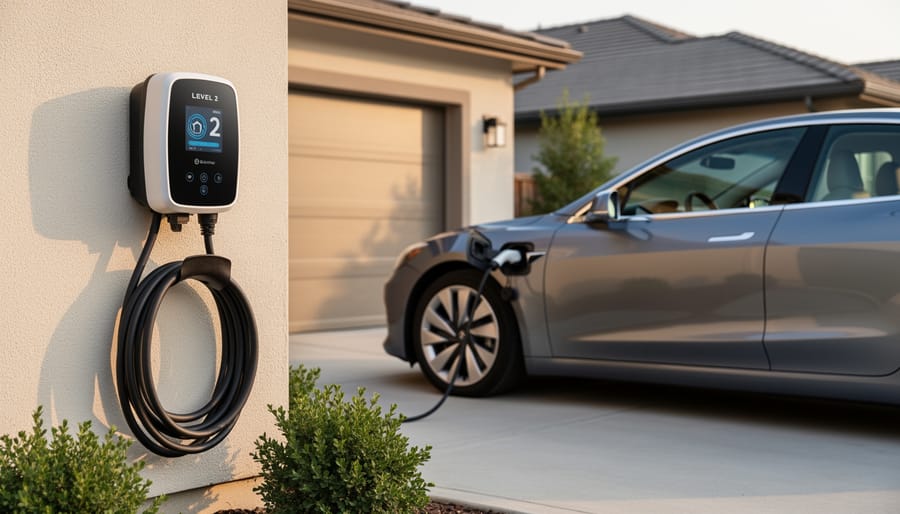
Federal tax credits for electric vehicles are no longer available for purchases made after September 30, 2025, when the federal Clean Vehicle Credit program ended. If you’re a Utah resident considering an electric vehicle in 2026, you won’t be able to claim the credit that once offered up to $7,500 for qualifying EV purchases. This program, which helped thousands of Americans offset the cost of going electric, officially closed to new applicants nearly ten months ago.
However, if you purchased or placed an order for a qualifying electric vehicle before the September 30, 2025 deadline and took delivery by December 31, 2025, you may still be eligible to claim the credit on your 2025 tax return if you haven’t already filed. The rules required that the vehicle meet specific battery component sourcing requirements, final assembly in North America, and price caps of $80,000 for vans, SUVs, and trucks or $55,000 for other vehicles. Income limits also applied: $300,000 for joint filers, $225,000 for heads of household, and $150,000 for single filers.
For Utah residents exploring electric vehicles today, the focus has shifted to state-level incentives and the broader economics of EV ownership. Utah currently offers a modest state tax credit for alternative fuel vehicles, though it’s significantly smaller than the expired federal program. More importantly, many EV owners in Utah are discovering that pairing an electric vehicle with home solar installation creates compounding savings by generating the electricity needed to charge the vehicle at minimal long-term cost.
What Happened to Federal EV Tax Credits
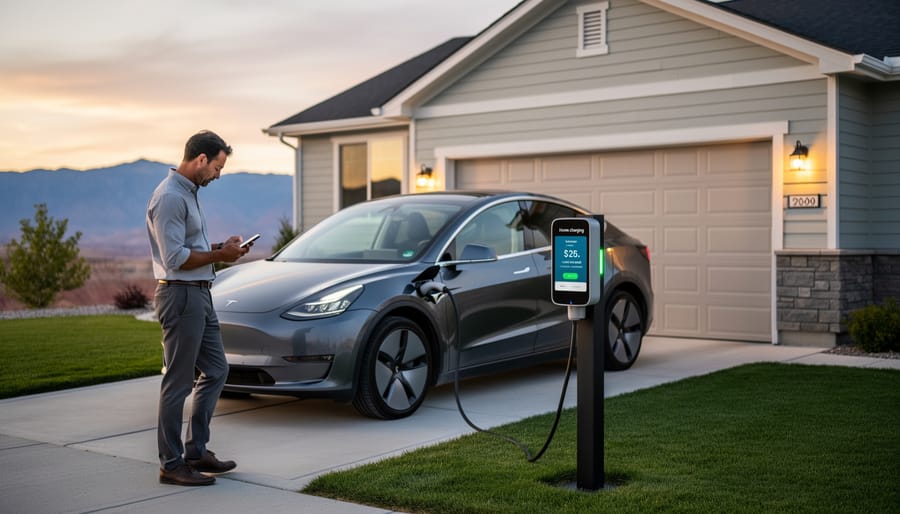
The Acquisition vs. Placed-in-Service Rule
The federal tax credit rules created an important distinction that affected buyers in late 2025: the acquisition date and the placed-in-service date could be different, and both mattered for eligibility.
Acquisition occurred when you entered into a binding written contract and made a payment on the vehicle. This had to happen on or before Sept. 30, 2025, to qualify for the credit. The payment could be a deposit rather than the full purchase price, but you needed a signed contract that legally obligated both parties to complete the sale.
Placed-in-service is when you actually took possession of the vehicle, essentially, delivery day. This date could fall after the September deadline without disqualifying you, as long as you’d completed the acquisition step before Sept. 30.
Here’s what this meant in practice: If you signed a purchase agreement and put down a deposit on Sept. 15, 2025, but the dealer didn’t deliver your EV until November 2025, you could still claim the credit. Your acquisition date (Sept. 15) met the deadline, even though you placed the vehicle in service later.
This provision helped buyers who ordered vehicles before the credits end after Sept. 30, 2025 deadline but faced delivery delays. However, you needed proper documentation: the dated purchase contract, proof of payment, and verification that your seller had registered with the IRS and reported your vehicle’s information. Without seller registration, even a properly timed acquisition wouldn’t qualify for the credit.
Seller Registration Requirements
For a vehicle purchased before the September 30, 2025 deadline to qualify for federal tax credits, the seller had to complete two critical steps. First, they needed to register online with the IRS through the agency’s seller registration system. Second, they were required to report specific information about the vehicle and the transaction to the IRS.
This wasn’t optional. If the seller didn’t register and report the required details, the vehicle became ineligible for the credit regardless of when you acquired it or whether it otherwise met all requirements.
When you took possession of your vehicle, the seller should have provided you with documentation confirming your vehicle’s qualifications for the credit. This paperwork included details about the vehicle’s eligibility status and served as your receipt that the seller had fulfilled their reporting obligations.
If you purchased a vehicle before the deadline and haven’t yet claimed your credit, verify that your seller completed the registration and reporting process. Contact the dealership or seller to confirm they submitted the required information to the IRS. Without this confirmation, you may face complications or denial when filing your tax return, even if you met the acquisition deadline and all other eligibility criteria.
If You Purchased Before September 30, 2025

If you entered into a binding written contract and made a payment on an electric vehicle on or before September 30, 2025, but took possession after that date, you may still qualify for the credit when you file your taxes. The key is proving acquisition occurred before the deadline, even though you placed the vehicle in service later.
Your seller should have provided specific documentation about your vehicle’s qualifications when you took possession. This includes confirmation that they registered your purchase with the IRS and reported the required information. Without that seller registration, the vehicle won’t be eligible regardless of when you signed the contract. If you haven’t received this documentation, contact your dealer or seller immediately to verify they completed the registration process.
To claim the credit, you’ll need copies of your written contract showing the date signed, proof of payment made by September 30, and the seller-provided paperwork confirming IRS registration. Keep records of the date you actually took possession of the vehicle as well. When preparing your tax return, you’ll report these details to demonstrate that while you placed the vehicle in service after the deadline, you acquired it before.
Utah residents who purchased qualifying vehicles under these conditions should consult the IRS guidelines or work with a tax professional to ensure all requirements are met. The distinction between acquisition date and placed-in-service date matters significantly for these final eligible purchases. If your seller failed to register with the IRS or you can’t document a binding contract and payment before September 30, the credit is unavailable.
Utah-Specific EV Incentives Still Available in 2026
Even though federal EV tax credits ended in September 2025, Utah residents shopping for electric vehicles in 2026 still have access to financial support through state and local programs. These incentives vary by program type and eligibility, so checking current availability is essential before making a purchase decision.
Utah’s Clean Fuel Vehicle Tax Credit offers a state income tax credit for qualifying electric vehicles. The credit amount depends on vehicle type and purchase date, with different tiers for all-electric versus plug-in hybrid models. Income limits and vehicle price caps apply, so you’ll need to verify whether your household and chosen vehicle qualify under current program rules.
Several Utah utilities offer rebates or special rates for EV owners. Rocky Mountain Power runs time-of-use programs that reduce electricity costs when you charge overnight, and some utilities provide upfront rebates for purchasing qualifying electric vehicles. Contact your local utility directly to ask about current programs, since offerings change as utility budgets and priorities shift.
| Incentive Type | What It Offers | Where to Check |
|---|---|---|
| State Tax Credits | Income tax credits for qualifying EV purchases | Utah State Tax Commission website |
| Utility Rebates | Upfront rebates or reduced charging rates | Your local utility provider |
| Local Programs | Municipal or county purchase incentives | City or county government offices |
Some municipalities and counties offer their own EV purchase incentives or charging infrastructure support. These programs are typically smaller and more targeted than state offerings, but they can stack with other incentives to increase your total savings. Check with your city or county government to see what’s available in your area.
The availability and amounts of these programs shift as budgets are allocated and renewed. What’s offered at the start of 2026 may differ by year-end, so confirm current details before finalizing your vehicle purchase. Dealers may know about some programs, but going directly to the program source gives you the most accurate and up-to-date information on eligibility and how to apply.
How the End of Federal Credits Affects EV Pricing
When federal tax credits disappeared after September 30, 2025, many automakers responded by cutting sticker prices. Several manufacturers lowered their EV prices by amounts close to the old credit values, in some cases $3,750 to $7,500, to keep vehicles competitive. That means you might find new electric cars selling for less than they did when the credits were active, though the adjustment varies by brand and model.
Dealers in Utah now have more flexibility during negotiations. Without a fixed federal incentive that every buyer could claim, pricing becomes more fluid. You can negotiate on the vehicle price itself rather than relying on a tax benefit you’d receive months later. Some dealers have shifted unsold 2025 inventory at steeper discounts, and others bundle additional perks like charging equipment or service packages to close deals.
Your cost-benefit analysis looks different now. Previously, you’d subtract the credit from the purchase price when calculating total cost. Today, you compare the net price after any manufacturer reductions, state incentives, and dealer offers. Factor in Utah’s lower electricity rates, averaging around 11 cents per kilowatt-hour, and the savings on fuel can still make EVs financially attractive over five to seven years of ownership. Maintenance costs remain lower than gas vehicles, with no oil changes and fewer brake replacements thanks to regenerative braking.
Run the numbers for your specific situation: purchase price, expected miles driven, home charging costs, and available state or utility rebates. The federal credits are gone, but the fundamentals of EV ownership, lower operating costs and reduced fuel expenses, still hold in Utah’s market.
Making the Switch to Solar and EVs in Utah
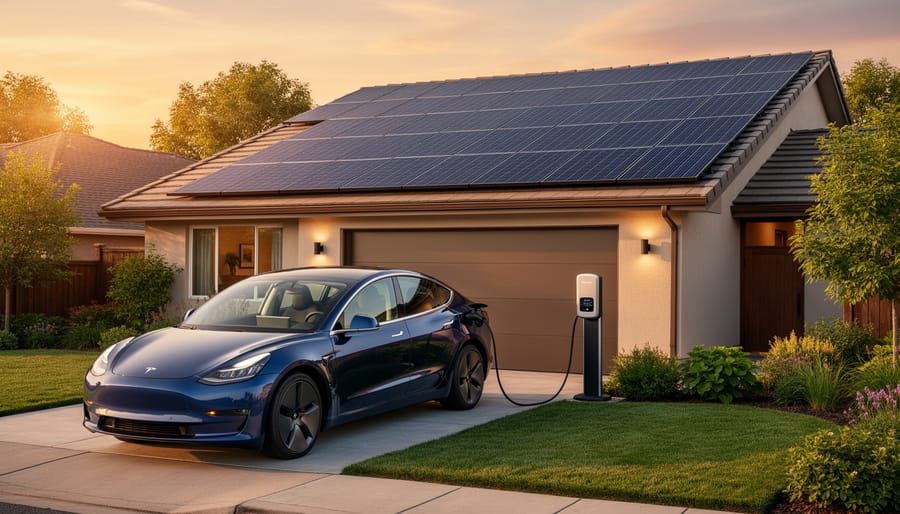
Pairing an electric vehicle with home solar panels offers Utah residents a way to reclaim some of the savings that federal EV credits once provided. When you charge your EV using electricity generated by your own rooftop solar system, you cut or eliminate the cost of “fueling” your vehicle, essentially driving on sunlight instead of grid power. Over time, this combination can offset the higher upfront cost of an EV, particularly now that federal purchase incentives have ended.
Utah’s solar landscape remains favorable even without federal EV credits. The federal solar investment tax credit (ITC) still allows homeowners to deduct 30% of solar installation costs from their federal taxes through 2032, then steps down to 26% in 2033 and 22% in 2034. For a typical residential solar system costing $20,000 before incentives, that’s $6,000 back at tax time. When you factor in the electricity savings from charging an EV at home, potentially $1,000 to $1,500 per year compared to gasoline, the math starts to shift in favor of the solar-plus-EV combination.
Utah’s abundant sunshine (averaging 300 days per year) and net metering policies further strengthen the case. Net metering credits you for excess solar power sent back to the grid, which you can draw on when charging overnight or during cloudy periods. This means your solar array can effectively power your EV around the clock, not just when the sun is shining. The result: long-term savings and energy independence that don’t rely on federal EV purchase credits.
The end of federal EV tax credits in September 2025 doesn’t mean electric vehicles have lost their appeal for Utah residents. State and local incentives, utility rebates, and manufacturer pricing adjustments can still make EVs financially competitive. Beyond the sticker price, integrating an electric vehicle with a home solar system offers long-term savings on fuel and electricity costs that compound over years of ownership.
If you purchased a vehicle before the September 30, 2025 deadline, verify that your seller registered properly with the IRS and gather your documentation to claim the credit. For new buyers in 2026, research current Utah-specific programs and calculate the total cost of ownership, including maintenance savings and energy expenses. The federal incentive may be gone, but the combination of lower operating costs, available state support, and solar integration can still deliver meaningful value for Utah families and businesses making the switch to electric.