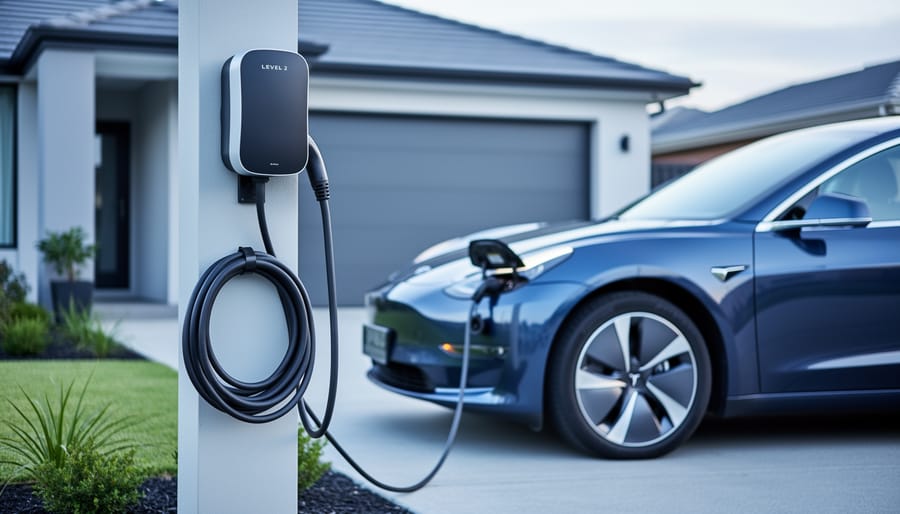
An electric vehicle savings calculator shows you whether switching to an EV makes financial sense by comparing your current fuel and maintenance costs against electricity rates, charging expenses, and available incentives. Most calculators require just four inputs: your annual mileage, current fuel costs, local electricity rates, and the EV model you’re considering. The entire process takes about five minutes and delivers personalized estimates that can reveal potential savings of $800 to $1,500 per year for the typical Utah driver.
The calculation matters more than ever in 2026. Federal EV tax credits expired in late 2025, shifting the financial equation toward operating costs rather than upfront purchase incentives. For Utah residents, this makes understanding your actual electricity costs crucial, especially given the state’s average residential rate of 11.5 cents per kilowatt-hour, one of the lower rates in the western United States. If you’ve installed solar panels, your charging costs could drop even further, sometimes to nearly zero during peak production months.
These calculators account for variables many buyers overlook. Maintenance savings add up quickly since EVs have no oil changes, fewer brake replacements thanks to regenerative braking, and simpler drivetrains with fewer parts to fail. Utah’s temperature extremes do affect battery performance and range, particularly during winter months, and accurate calculators factor in this seasonal variation.
The challenge isn’t finding a calculator but using one that reflects Utah-specific costs, local utility rate structures, and the state incentives that remain active. This guide walks you through selecting the right tool and entering accurate data to get results you can trust.
What You’ll Need Before You Start
Gathering Your Electricity Rate Information
Your electricity rate is the foundation of any EV savings calculation, so you need the most accurate number possible. Start by checking your most recent utility bill from your provider, Rocky Mountain Power serves most of Utah, but municipal utilities like Provo Power, Logan City Light & Power, and others serve specific areas. Your rate appears as cents per kilowatt-hour (kWh), typically in the summary or rate schedule section of your bill.
Don’t just grab the first number you see. Many Utah utilities offer time-of-use (TOU) rates that charge different amounts depending on when you use electricity. If you charge your EV overnight during off-peak hours, you might pay significantly less per kWh than the standard rate. Call your utility’s customer service line or log into your online account to ask specifically about EV charging rates or TOU programs, some aren’t advertised prominently but can cut your charging costs by 30% or more.
If your bill shows a tiered rate structure where the cost per kWh increases as you use more electricity, use your average rate from the past few months rather than just the base tier. This gives you a realistic picture of what you’ll actually pay when you add EV charging to your household consumption. Write down both your standard rate and any available TOU rates so you can compare scenarios in the calculator.

Understanding Your Driving Patterns
Accurate driving data forms the foundation of reliable EV savings calculations. Start by pulling your actual annual mileage from your current vehicle’s odometer readings over the past 12 months, or check your insurance policy documents where you likely reported estimated annual miles. If you don’t have exact records, calculate a weekly average by tracking your odometer for two typical weeks and multiplying by 52.
Your typical daily driving distance matters because it determines how often you’ll need to charge. Track your routine for five weekdays and two weekend days, noting the miles driven each day. Calculate the average to get your daily baseline, most Utah residents drive 30-40 miles per day for commuting and errands.
The highway versus city driving split significantly impacts both energy consumption and savings projections. Electric vehicles excel in stop-and-go city driving where regenerative braking recovers energy, while highway driving at sustained speeds uses more battery capacity per mile. Review your recent trips and estimate what percentage involves highway speeds above 55 mph versus city streets. A 60/40 city-to-highway ratio is common for urban Utah drivers, while rural residents might see 30/70 or lower. Most calculators let you input this ratio directly, and getting it right ensures your projected electricity costs reflect how EVs actually perform in your driving conditions.

Important Considerations Before Calculating
EV Charging Equipment Tax Credits
While federal credits not available for EV purchases after September 2025, the charging equipment tax credit remains active through June 30, 2026 charger credit. This 30% federal tax credit applies to the purchase and installation of qualified charging equipment at your home or business, potentially offsetting a significant portion of your upfront costs.
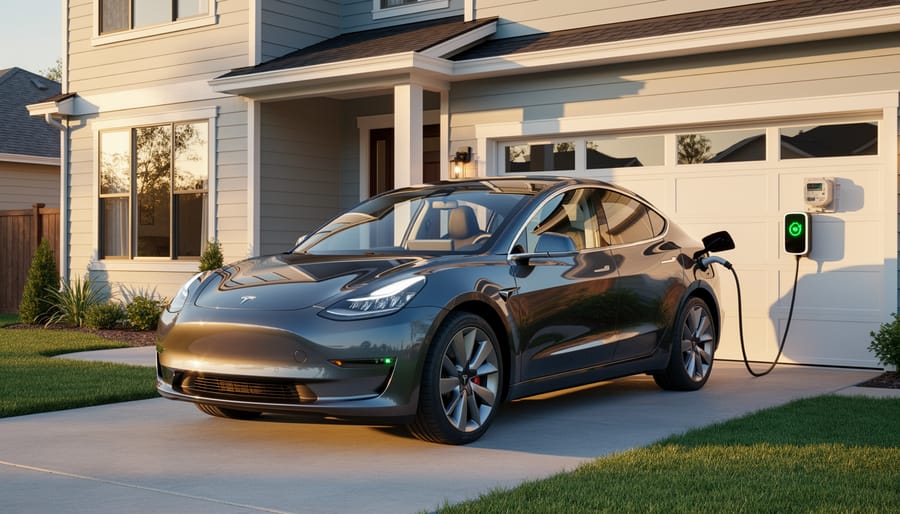
When using an EV savings calculator, include your charging equipment expenses in the initial cost field. For a typical Level 2 home charger costing $1,200 installed, the tax credit reduces your net expense to $840. This affects your total ownership calculation and break-even timeline. Business owners may qualify for higher credit amounts depending on the installation location and equipment type.
Factor this credit into your calculator inputs by subtracting 30% from your expected charging equipment costs before entering the total. Most calculators ask for total out-of-pocket expenses, so accounting for the tax credit upfront gives you a more accurate projection of your real investment and payback period for switching to electric.
Step-by-Step: How to Use an Electric Vehicle Savings Calculator
Entering Fuel and Electricity Costs
Start by locating the fuel and electricity cost input fields in your chosen calculator. Most tools pre-populate these with national or regional averages, but you’ll get more accurate projections by entering your actual local rates.
For gasoline prices, check current prices at stations you typically use rather than relying on statewide averages. Utah gas prices can vary significantly between Salt Lake City, rural areas, and communities near state borders. Enter the price per gallon you regularly pay, as this directly affects how much you’re spending now versus what you’d spend charging an EV.
Electricity rates require more attention. Pull up your most recent utility bill from Rocky Mountain Power or your municipal provider and find the rate per kilowatt-hour (kWh). Many Utah utilities charge different rates depending on time of day, so if you have time-of-use pricing, enter the rate that matches when you’d typically charge your vehicle, usually overnight when rates are lowest.
Calculators like ChooseEV use approximations of current rates as starting points, which means they may not reflect your specific utility’s pricing or recent rate changes. Take a moment to verify the pre-filled numbers against your actual bills and local pump prices. A difference of even a few cents per kWh or per gallon can shift your projected savings by hundreds of dollars annually, especially if you drive frequently.
Checking Utah-Specific Incentives
Most EV savings calculators include a field for state and local incentives, but you’ll need to research these separately since calculator databases often lag behind current program changes. Start by visiting Utah’s Department of Environmental Quality website to check for active state-level EV incentives. While federal tax credits expired on September 30, 2025, some state programs may still exist for certain vehicle types or income levels.
Contact your electricity provider directly to ask about EV-specific rates or rebates. Rocky Mountain Power, which serves much of Utah, occasionally offers time-of-use rates that reduce charging costs during off-peak hours. Call their customer service line and ask specifically about electric vehicle programs, managed charging incentives, or special EV rate plans. Municipal utilities in cities like Provo, St. George, and Logan may have their own programs with different structures and benefits than investor-owned utilities.
Check with your city or county government for local incentives. Some Utah municipalities offer rebates for home charging equipment installation, reduced permit fees for electrical upgrades, or preferential parking programs for EV owners. These local programs rarely appear in national calculator databases, so you’ll need to search your city’s website or call the planning department directly.
When you’ve gathered this information, enter the total dollar amount of available incentives into your calculator’s incentive field. If the calculator asks you to separate state, local, and utility incentives, organize them accordingly. Document where each incentive came from and verify eligibility requirements before including them in your calculations, since many programs have income limits, vehicle price caps, or residency requirements that may affect whether you actually qualify.
Comparing Multiple Vehicle Options
Running multiple comparison scenarios helps you identify which electric vehicle delivers the strongest savings for your specific situation. Most EV savings calculators let you save or export different scenarios, making it easy to evaluate several options side by side.
Start by selecting a baseline gas vehicle you currently drive or would otherwise purchase. Enter its year, make, model, and trim level to establish your comparison point. Then run calculations for two or three EV models you’re seriously considering. Pay attention to trim levels, a base model EV with a smaller battery might cost less upfront but require more frequent charging stops, while a long-range trim costs more but could save time and convenience.
Compare similar vehicle classes to get meaningful results. Matching a compact EV against a midsize SUV skews the numbers because you’re comparing different vehicle types, not just powertrains. For the fairest comparison, choose EVs and gas vehicles that serve the same purpose in your household.
Save each scenario with clear labels noting the vehicle and key assumptions. Some calculators let you adjust variables like annual mileage or electricity rates between scenarios, so keep those consistent unless you’re specifically testing how different driving patterns affect each vehicle’s savings potential. Review the total five-year or ten-year cost of ownership across all scenarios to spot which combination of purchase price, operating costs, and available incentives delivers the best value for your Utah driving needs.
Verifying and Interpreting Your Results
Understanding Break-Even Points
The break-even point shows when your cumulative EV savings offset the higher purchase price compared to a gas vehicle. Most calculators display this as months or years of ownership, typically ranging from three to seven years depending on your driving habits and electricity costs.
To interpret your results accurately, focus on three key outputs. First, look at the total cost of ownership over your expected ownership period, not just the sticker price difference. Second, examine the monthly savings projection, which combines fuel savings and reduced maintenance costs. Third, identify the break-even timeline and assess whether it fits your vehicle ownership plans.
Utah-specific conditions can shift break-even points significantly. If you charge primarily at home with rates around 10 to 12 cents per kilowatt-hour through Rocky Mountain Power or municipal providers, you’ll reach break-even faster than the national average. Drivers covering 15,000 or more miles annually see shorter payback periods because fuel savings accumulate more quickly.
Consider that calculators assume consistent driving patterns and stable energy prices. If you install home solar panels or qualify for time-of-use rates that reduce charging costs further, your actual break-even point may arrive sooner than projected. Cold weather battery performance in Utah winters might extend the timeline slightly, but most drivers find this impact modest compared to ongoing fuel savings.

Factors That Affect Your Actual Savings
Calculators provide useful projections, but several real-world factors can push your actual savings higher or lower than the estimates. Understanding these variables helps you set realistic expectations and plan more effectively for EV ownership in Utah.
Maintenance and Operating Cost Differences
EVs typically cost less to maintain than gas vehicles because they have fewer moving parts, no oil changes, transmission fluid, spark plugs, or timing belts. However, calculators don’t always account for tire wear, which can be higher on EVs due to instant torque and heavier battery weight. Brake maintenance is minimal thanks to regenerative braking, but cabin air filters and wiper blades still need regular replacement.
Insurance premiums for EVs can run 15-25% higher than comparable gas vehicles, mainly because battery repair costs are significant after accidents. Shop around with multiple insurers; some offer EV-specific discounts that offset the premium increase. Your calculator may not include these insurance differences unless you manually adjust inputs.
Utah-Specific Considerations
Several factors unique to Utah conditions affect your real savings:
- Reduced maintenance costs from fewer oil changes, transmission services, and brake replacements
- Potential insurance premium differences, with some carriers charging more for battery replacement risk
- Home solar system integration benefits that eliminate most charging costs when panels offset electricity use
- Cold weather efficiency impacts in Utah winters, where range can drop 20-40% and heating draws battery power
- Resale value considerations, as the used EV market remains volatile compared to established gas vehicle depreciation patterns
If you’ve installed or plan to install solar panels, your charging costs could approach zero during sunny months, dramatically improving savings beyond what generic calculators show. Utah’s elevation and temperature swings mean winter efficiency losses are real, you’ll use more electricity per mile from November through March, which affects annual averages. Factor in about 15-20% higher winter electricity consumption when validating calculator results against your actual utility bills.
Frequently Asked Questions
EV savings calculators provide helpful cost estimates, but Utah residents often have questions about how to use them effectively now that federal tax credits have expired and how local conditions affect projections.
Are EV savings calculators accurate for my situation?
Calculators provide estimates based on average data, but your actual savings depend on accurate inputs for your specific driving patterns, electricity rates, and charging habits. The values in tools like ChooseEV are approximations of today’s electricity and gasoline rates, so updating them with your exact Utah utility rates improves accuracy.
How should I account for expired federal EV tax credits in calculator results?
Since the New Clean Vehicle Credit and Previously-Owned Clean Vehicle Credit are not available for vehicles acquired after September 30, 2025, ignore or manually subtract any federal credit amounts that appear in calculator results. Focus instead on Utah state incentives, local utility rebates, and the ongoing fuel and maintenance savings.
What electricity rate should I enter if I have solar panels?
If you charge primarily with home solar, use your net metering rate or actual cost per kilowatt-hour after accounting for solar production rather than your standard utility rate. This typically shows much higher savings since you’re avoiding both gasoline and grid electricity costs for most charging.
Do savings calculators include maintenance cost differences?
Most calculators estimate basic maintenance savings from EVs having fewer moving parts and no oil changes, but these estimates vary widely. Real-world maintenance savings in Utah can be substantial over time, though you may face higher tire replacement costs due to EV weight and instant torque.
Calculator results show total savings over a specified ownership period, typically five to ten years. When reviewing these projections, remember they assume consistent driving patterns and stable energy costs. Utah’s gasoline and electricity prices fluctuate seasonally, and your actual charging location mix between home, work, and public stations affects real costs.
If you installed EV charging equipment at an eligible location before June 30, 2026, the 30% federal tax credit for that equipment reduces your upfront costs but won’t appear in most calculator results automatically. Add this savings manually when comparing total ownership costs between EVs and gas vehicles.
Temperature extremes affect EV range and efficiency differently than calculator averages suggest. Utah’s cold winters reduce battery efficiency, meaning you’ll use more electricity per mile during several months each year than moderate-climate estimates show. Factor in roughly 20-30% higher winter electricity consumption when evaluating annual charging costs for the most realistic projections.
Tools and materials
Using an EV savings calculator doesn’t require physical tools, but you’ll need to gather specific information before you start. Think of these as your digital materials.
First, collect your recent electricity bills from your Utah utility provider. You’ll need at least three months of bills to identify your average kilowatt-hour rate. If you’re on a time-of-use plan with Rocky Mountain Power or your municipal provider, note the different rates for peak and off-peak hours.
Next, pull together your vehicle information. Grab your current car’s make, model, and year, plus your last few fuel receipts to calculate average gas spending. You’ll also need your odometer reading or maintenance records to determine annual mileage.
Have a notepad or spreadsheet ready to record results from multiple calculator runs. This lets you compare different EV models side-by-side.
Finally, gather documentation of any charging infrastructure you plan to install. If you’re considering a Level 2 home charger before June 30, 2026, you’ll want installation quotes to factor in the 30% federal tax credit for charging equipment alongside your vehicle savings.
Step-by-step process
Start by gathering your current electricity bill from your Utah utility provider to find your exact rate per kilowatt-hour. Look for time-of-use pricing if your provider offers it, as this affects charging costs significantly.
Next, calculate your annual mileage by checking your odometer readings from the past year or reviewing maintenance records. Divide this number by 365 to get your daily average, and note what percentage is highway versus city driving.
Open an EV savings calculator like ChooseEV and enter your vehicle information. Input the specific EV model you’re considering along with a comparable gasoline vehicle you currently drive or would otherwise purchase.
Input your electricity rate and current gasoline prices. Keep in mind the calculator values are approximations, so update them with your actual Utah rates for accuracy. Enter your annual mileage and typical driving patterns.
Review the calculator’s default assumptions about incentives. Since federal EV tax credits expired after September 30, 2025, manually remove any federal credit amounts if they appear. Add any Utah state incentives or local utility rebates you’ve confirmed are still available.
Run the calculation and review your projected annual savings, total cost of ownership over five and ten years, and estimated break-even point. Save or print these results for reference when making your purchasing decision.
verification
After you complete your calculator analysis, take a few key steps to confirm your estimates reflect reality. Start by comparing your projected monthly electric costs against your current utility bill. If the calculator shows you’d spend $40 monthly charging at home but your recent bills averaged $85 for the entire household, that $40 figure seems reasonable. Cross-check the gasoline savings by multiplying your annual mileage by your current vehicle’s real-world MPG, then dividing by current pump prices. This confirms the baseline you’re comparing against.
Next, verify any incentive amounts by checking directly with Rocky Mountain Power or your municipal utility, since calculator databases sometimes lag behind program updates or changes. Call or visit your utility’s website to confirm rebate eligibility and amounts rather than relying solely on the tool’s suggestions. For charging equipment costs, get actual quotes from licensed electricians for installing a Level 2 charger at your home. This ensures you account for your specific electrical panel capacity and installation requirements, which generic calculators can’t assess remotely.
Finally, run your scenario through at least two different calculators to spot major discrepancies, then investigate any large differences in their assumptions or data sources.
EV savings calculators give Utah residents a practical starting point for understanding the true cost of electric vehicle ownership. While federal tax credits for new EVs expired at the end of September 2025, these tools remain essential for comparing total ownership costs over time, factoring in electricity rates, maintenance savings, and the charging equipment credit still available through June 2026.
The accuracy of your results depends entirely on the quality of information you input. Use your actual utility rates from Rocky Mountain Power or your municipal provider rather than national averages. Update calculator defaults with current gasoline prices and your real driving patterns. Check for Utah-specific utility rebates and local programs that calculators might not automatically include.
Think of these calculators as planning tools, not crystal balls. Real-world savings vary based on how you drive, where you charge, and whether you integrate home solar. Run multiple scenarios with different vehicles and assumptions to see how sensitive your savings are to each variable.
Take time to explore what’s available locally. Contact your utility about time-of-use rates and charging incentives. Research home charging equipment costs and installation requirements. The upfront work you do now with these calculators helps you make a decision based on your actual circumstances, not generic national averages.